The Complete Guide to Standby Generators for Pennsylvania Homeowners
A plain-English guide from the licensed electricians at Merry Brothers Electrical Services, serving Berks, Montgomery, and Bucks counties. Prices and specifications are general estimates; every home is sized and quoted individually.
A standby generator is a permanently installed backup power system that switches on automatically within seconds of an outage and runs your home on natural gas or propane until utility power returns. For most Pennsylvania homeowners, a properly sized standby generator restores heat, water, refrigeration, sump pumps, and medical equipment without a single extension cord, manual pull-cord, or trip outside in a storm.
This guide walks through how standby generators work, how to size one for your home, which fuel and model to choose, what installation and permitting look like in Pennsylvania, and what the system costs to own over time. If you are weighing whole-home backup power for the first time, start here.
How Does a Standby Generator Work?
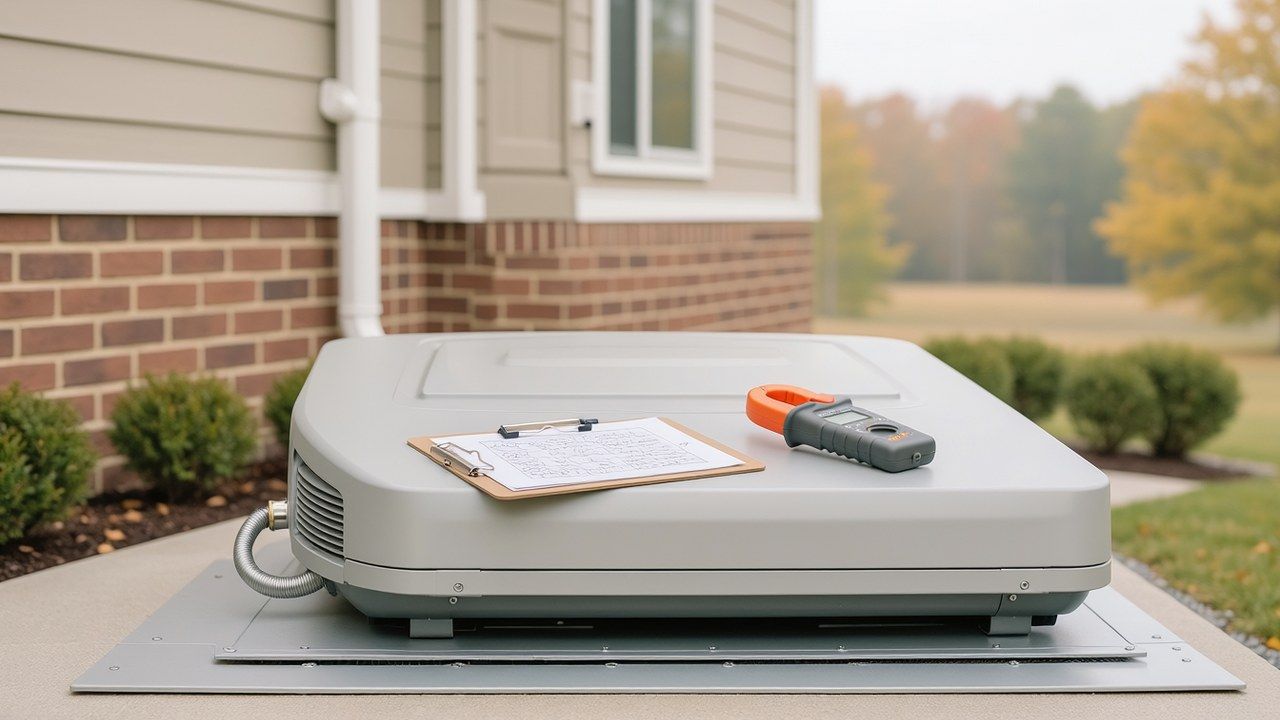
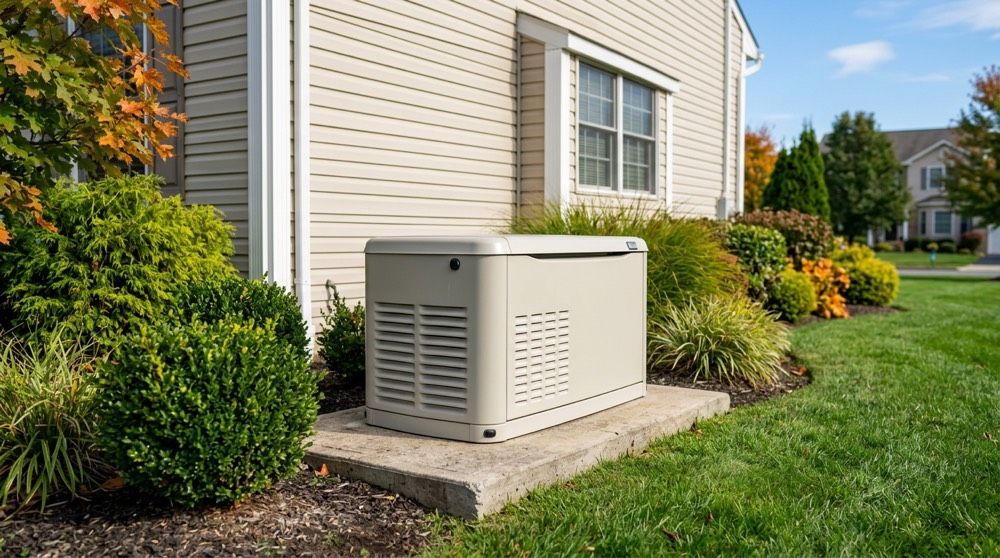
A standby generator works by continuously monitoring your home's electrical supply and starting automatically the moment utility power drops. It is a permanent, weatherproof unit installed on a pad outside the house, wired to your electrical system through an automatic transfer switch.
When the power fails, the transfer switch senses the loss within seconds, signals the generator to start, and safely disconnects your home from the utility grid before feeding it generator power. That last step matters: it protects utility line workers from dangerous backfeed and protects your electronics from an unstable connection. When utility power returns and stabilizes, the transfer switch shifts your home back to the grid and shuts the generator down. The whole cycle is automatic — you do not have to be home, awake, or even aware that the power went out.
Because a standby unit is hard-wired and fueled by a fixed gas line or a large propane tank, it runs for days if it has to, unlike a portable generator that needs constant refueling and manual setup. To understand the payoff in everyday terms, our team also covers why invest in a Generac home backup generator in a companion article.
Standby vs. Portable Generators
The core difference is automation and capacity: a standby generator is permanently installed and starts itself, while a portable generator must be rolled out, fueled, and connected by hand every time. That distinction drives almost every other decision.
A portable generator is cheaper up front and can be useful for running a few essentials, but it demands that someone go outside during a storm, run it a safe distance from the house to avoid carbon monoxide, and refill its gas tank every several hours around the clock. It cannot power central heating, a well pump, and a full kitchen at the same time on most homes. A standby generator, by contrast, is sized to carry either your whole house or a chosen set of circuits and does it hands-free. For Pennsylvania families who lose power during winter storms and summer thunderstorms — often while they are away or asleep — the automation is usually worth the higher investment.
How Much Backup Power Does Your Home Need?
The right size depends on what you want to keep running: a whole-house approach powers essentially everything at once, while a managed or "critical loads" approach powers a prioritized set of circuits with a smaller, less expensive unit. Both are valid; the correct choice comes from an electrical load calculation, not a guess.
A licensed electrician totals the running and starting demands of the systems you want backed up — heating and air conditioning, well or sump pumps, the refrigerator and freezer, key outlets and lighting, and any medical devices — then adds the surge that motors draw when they start. Air conditioners and well pumps, in particular, spike hard at startup, which is why homes with central air often need more capacity than their square footage alone suggests. The result is a target wattage, usually expressed in kilowatts (kW), that points to a specific generator size. Skipping this step is the most common sizing mistake: an undersized unit overloads and shuts down, while a wildly oversized one wastes money.
Transfer Switches and Load Management
The automatic transfer switch is the component that makes a standby generator "automatic," and it is nearly as important as the generator itself. It is the brain that senses an outage, disconnects your home from the grid, and routes generator power safely to your circuits.
Transfer switches come in two broad styles. A whole-house switch backs up your entire electrical panel, while a managed switch uses load management to power a prioritized set of circuits and shed lower-priority loads automatically when demand runs high. Load management is what lets a moderately sized generator behave like a larger one: if the air conditioner and the electric range would together exceed capacity, the system briefly stages them instead of overloading. Your electrician selects and programs the switch to match the generator size and the loads you said mattered most, then confirms it during startup. Because the transfer switch also provides the code-required separation from the utility grid, it is central to a safe, legal installation — one more reason this is professional work rather than a do-it-yourself hookup. If your existing service panel is older or already full, the transfer switch project is often a natural moment to address it.
Choosing a Fuel Source: Natural Gas or Propane
Most Pennsylvania standby generators run on either natural gas or liquid propane, and the best choice usually comes down to what is already at your home. If you have a natural gas line, that is typically the simplest and most convenient fuel; if you do not, propane from an on-site tank is the standard alternative.
Natural gas draws from your existing utility line, so there is no tank to monitor and, in most cases, effectively unlimited runtime as long as the gas supply holds. Propane requires a tank on your property, but it stores well for years, burns cleanly, and is a strong option for rural Berks and Bucks County properties beyond the natural gas network. Propane also lets you keep a known reserve on hand. Your electrician and fuel supplier will confirm line sizing and pressure, because an undersized gas line can starve a large generator — another reason professional installation matters.
Generac Models for Pennsylvania Homes
Generac's residential air-cooled standby lineup spans roughly 10 kW through 26 kW, and most single-family Pennsylvania homes land somewhere in that range depending on their size and what they need to power. Larger homes with multiple air conditioners or electric heat may move to a liquid-cooled unit.
As a broad guide, smaller homes running a furnace, refrigerator, and essential circuits may fit a unit in the mid-teens of kilowatts, while larger homes wanting true whole-house coverage — central air, well pump, electric range, and more — often step up toward the 22 kW to 26 kW range. Merry Brothers is a Generac Elite-tier dealer, which means the sizing, installation, and warranty support all come from a single certified source. The specific model always follows the load calculation described above; the goal is a unit matched to your home, not the biggest box on the shelf. You can see the full scope of our Generac generator installation and service program on our service page.
What Does a Standby Generator Cost in Pennsylvania?
A professionally installed whole-home standby generator in Pennsylvania is a five-figure investment for most homes, with the total driven by the unit's size, your fuel setup, and the electrical work your home needs. Treat any single number online with caution — the honest answer is that it is quoted per home.
The total includes the generator itself, the automatic transfer switch, the concrete or composite pad, gas or propane connection, electrical wiring, permits, and inspection. Homes that need a larger unit, a longer gas run, or a service-panel upgrade to accommodate the transfer switch will sit higher in the range. Because many older Pennsylvania homes still run smaller panels, an electrical panel upgrade is sometimes part of the project. The value side is real, too: reliable backup power protects against frozen pipes, spoiled food, sump-pump failures, and lost work-from-home days, and it can make a home more attractive to buyers.
Installation: What to Expect
A typical standby generator installation takes one to a few days on site once permits are in hand, and a good installer handles the whole chain — electrical, fuel, pad, permitting, and startup — so you are not coordinating multiple trades yourself. The generator arrives, is set on its pad, connected to fuel and to your electrical system through the transfer switch, then commissioned and tested.
During commissioning, the electrician programs the transfer switch, runs the generator under load, and confirms it starts, carries the home, and shuts down correctly. You should leave the appointment knowing how to read the status indicator, how the weekly self-test works, and who to call for service. Because the work ties directly into your home's fuel and electrical systems, it is not a do-it-yourself project in Pennsylvania — and doing it without permits can void warranties and complicate a future home sale.
Permits, Code, and Inspections in Pennsylvania
Standby generator installations in Pennsylvania require permits and inspections, and reputable installers pull them as a matter of course. The work must meet the National Electrical Code and any local municipal requirements for setback, placement, and fuel connections.
Permitting protects you: it means an independent inspector verifies the wiring, transfer switch, grounding, and fuel connections are safe and code-compliant. Municipalities across Berks, Montgomery, and Bucks counties each have their own permit process, and generator placement rules — how far the unit must sit from windows, doors, and property lines — can vary. An installer who knows the local jurisdictions keeps the project moving and prevents a failed inspection later. Skipping permits to save time is a false economy; unpermitted work can surface as a problem at resale and may not be covered under warranty.
Maintenance and the Weekly Exercise Cycle
A standby generator needs modest, predictable maintenance, and it takes care of part of that itself through a weekly self-test called an exercise cycle. The unit starts on its own for a few minutes each week to circulate oil, keep the battery charged, and confirm it is ready to run.
Beyond the automatic exercise cycle, plan on periodic service — oil and filter changes, battery checks, and a general inspection — usually once a year or on the manufacturer's recommended schedule, much like a car. Many owners keep a maintenance agreement so a technician handles it on time. A well-maintained standby generator can serve reliably for many years; a neglected one may fail exactly when a storm demands it. Because Merry Brothers installs and services what we sell, the same team that commissions your unit can keep it in ready condition.
Why Pennsylvania Homes Need Backup Power
Pennsylvania homes face a genuine, recurring outage risk from winter ice and snow, spring and summer thunderstorms, and the remnants of coastal systems, which makes reliable backup power more than a luxury for many families. Outages here are frequent enough that planning for them is reasonable, not alarmist.
Nationally, the average U.S. electricity customer lost power for roughly five and a half hours in 2022, according to the U.S. Energy Information Administration — and a single major storm can push a local figure far higher. Pennsylvania has seen exactly that: in early August 2020, the remnants of Tropical Storm Isaias knocked out power to more than a million PECO customers across southeastern Pennsylvania, some for several days. For a household with a well pump, a sump pump, electric heat, or someone who depends on powered medical equipment, that kind of multi-day outage is not just an inconvenience — it is a real risk to the home and the people in it. A standby generator turns those events into a brief flicker instead of a crisis.
Common Mistakes to Avoid When Buying a Standby Generator
The most costly standby generator mistakes happen before installation, in how the unit is chosen and who installs it. Avoiding a handful of common errors saves money and prevents the disappointment of a generator that underperforms when it finally matters.
The first mistake is buying on size alone — either grabbing the biggest unit "to be safe" or a bargain unit that cannot carry the home's real starting loads. Both come from skipping the load calculation. The second is treating fuel as an afterthought; an undersized or low-pressure gas line can starve an otherwise correctly sized generator. The third is choosing an installer on price without confirming they pull permits, are licensed and insured, and will handle inspection and startup. Unpermitted work can void the manufacturer's warranty and resurface as a problem at resale. A fourth is neglecting maintenance after the sale, so the battery or oil is out of spec on the night a storm hits. Finally, some homeowners skip service-panel readiness and are surprised mid-project; pairing the generator with a panel that can support it up front keeps the job on schedule. Working with a single certified dealer who sizes, installs, permits, and services the system sidesteps nearly all of these.
Frequently Asked Questions
How long can a standby generator run continuously?
A standby generator can run for days at a time. On natural gas, runtime is effectively limited only by the fuel supply, so many units can operate continuously through a multi-day outage. On propane, runtime depends on tank size and load. Units still need periodic rest for maintenance on very long outages, but for typical Pennsylvania storms, continuous operation is not a concern.
Will a standby generator power my entire house at once?
It can, if it is sized for whole-house coverage and your fuel supply supports it. Many homeowners choose a unit large enough to run everything, including central air and a well pump. Others select a smaller unit paired with load management that powers prioritized circuits. An electrical load calculation determines which approach fits your home and budget.
How loud is a Generac standby generator when it runs?
Modern air-cooled standby generators run at a moderate sound level, roughly comparable to a central air-conditioning unit, and are noticeably quieter than most portable generators. Enclosures are engineered to dampen noise, and the weekly self-test lasts only a few minutes. Local codes and the unit's placement relative to windows and property lines also help keep operating noise unobtrusive.
Does adding a standby generator increase my home's value?
A permanently installed standby generator is widely viewed as a desirable feature that can help a home stand out, particularly in areas prone to outages. Buyers often value the security of automatic backup power. While no single upgrade guarantees a fixed dollar return, a professionally installed, permitted, and well-maintained generator is a tangible asset that transfers with the home.
Ready to Talk Backup Power?
If you are weighing whole-home backup power for your Berks, Montgomery, or Bucks County home, the next step is a load calculation and an honest, itemized quote — no pressure, no guesswork. As a family- and veteran-owned, Generac Elite-tier dealer, Merry Brothers sizes, installs, permits, and services every system we sell. Contact us to schedule your assessment.
By Matthew Merry, Merry Brothers Electrical Services. Matt is a U.S. Navy veteran, former Pennsylvania police officer, and licensed electrical contractor serving Berks, Montgomery, and Bucks counties.