Pre-Storm Generator Maintenance Checklist
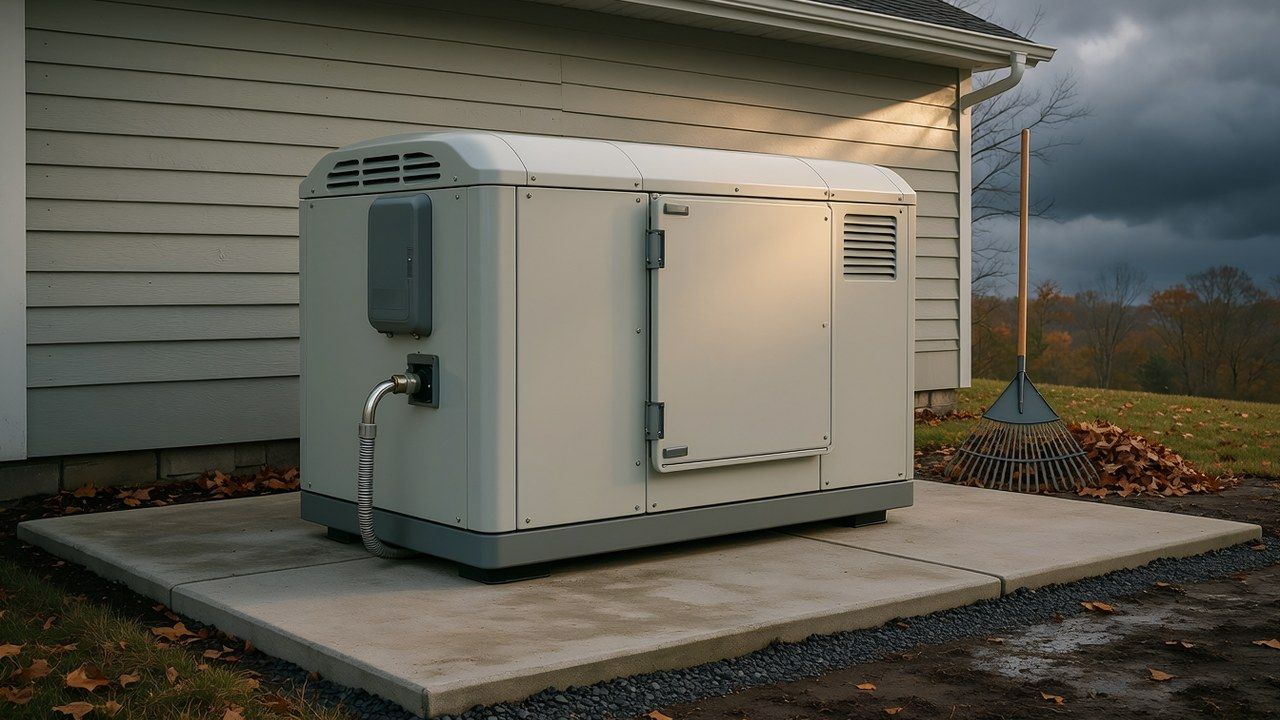
Pre-storm generator maintenance takes about ten minutes: confirm the unit is in AUTO, check oil and fluid levels, verify the battery and fuel supply, clear debris from the enclosure and vents, and watch one exercise cycle run through. Do it before the forecast turns, not after.
What Should You Check Before a Storm Arrives?
Check five things: control panel status, fluid levels, the battery, the fuel supply, and the area around the unit. Any one can prevent a start.
Confirm the controller reads AUTO with a green status light and no fault showing — a unit left in OFF after a service visit sits silent through the outage. Check oil on the dipstick, and confirm the battery terminals are clean and tight; a weak battery is the commonest cause of a no-start. On propane, check the gauge.
Clear the Enclosure and the Airflow
The generator needs unobstructed airflow and clearance on all sides to cool and vent exhaust safely. Autumn is when that goes wrong.
Leaves pile against the intake louvres and firewood gets stacked beside the unit. Clear it, confirm the exhaust points away from windows, and check the housing for a rodent nest.
Should You Run a Test Cycle Before a Storm?
Yes. Your generator self-tests weekly, but before a forecast storm you should trigger a cycle manually and watch it. The point is to observe the start, not just confirm one happened.
Listen for a slow crank, which usually means a failing battery. Watch for smoke, vibration, or a controller alarm, and confirm it shuts down cleanly. If anything sounds different, call before the storm. Our complete guide to standby generators for Pennsylvania homeowners covers the rest.
Why the Checklist Matters More Than It Sounds
A generator that fails to start sends households back to portable units, and that substitution carries real risk. The pre-storm check is a safety routine, not just a reliability one.
The U.S. Consumer Product Safety Commission reported in January 2024 that an average of nearly 100 people die each year in the United States from carbon monoxide poisoning caused by portable generators. A maintained standby unit vents outside. If yours needs attention, our Generac generator installation and service team can help.
Frequently Asked Questions
How often should a standby generator be professionally serviced?
Most manufacturers call for service once a year or at a set number of run hours, whichever comes first. It typically covers oil and filter changes, spark plugs, a battery load test, and inspection. A maintenance agreement keeps the timing off your memory.
Does a standby generator need fuel stored on site before a storm?
Not on natural gas — it draws continuously from the utility line, so there is nothing to stock up. Propane is different: runtime depends on tank level, so top up before storm season rather than during it, when deliveries slow.
What does a flashing or red status light on the controller mean?
A red or flashing indicator signals a fault to attend to before the unit is called on — commonly low oil, low battery voltage, a missed exercise cycle, or a service interval due. Note the code and call for service rather than clearing it.
Book Your Pre-Season Service
If your generator is overdue for service, or the last cycle sounded wrong, have it checked before the weather turns. Merry Brothers services standby generators across Berks, Montgomery, and Bucks counties. Contact us [https://www.merrybrothers.com/contact-us] to book a visit.
By Matthew Merry, Merry Brothers Electrical Services. Matt is a U.S. Navy veteran, former Pennsylvania police officer, and co-owner of Merry Brothers Electrical Services, serving Berks, Montgomery, and Bucks counties.